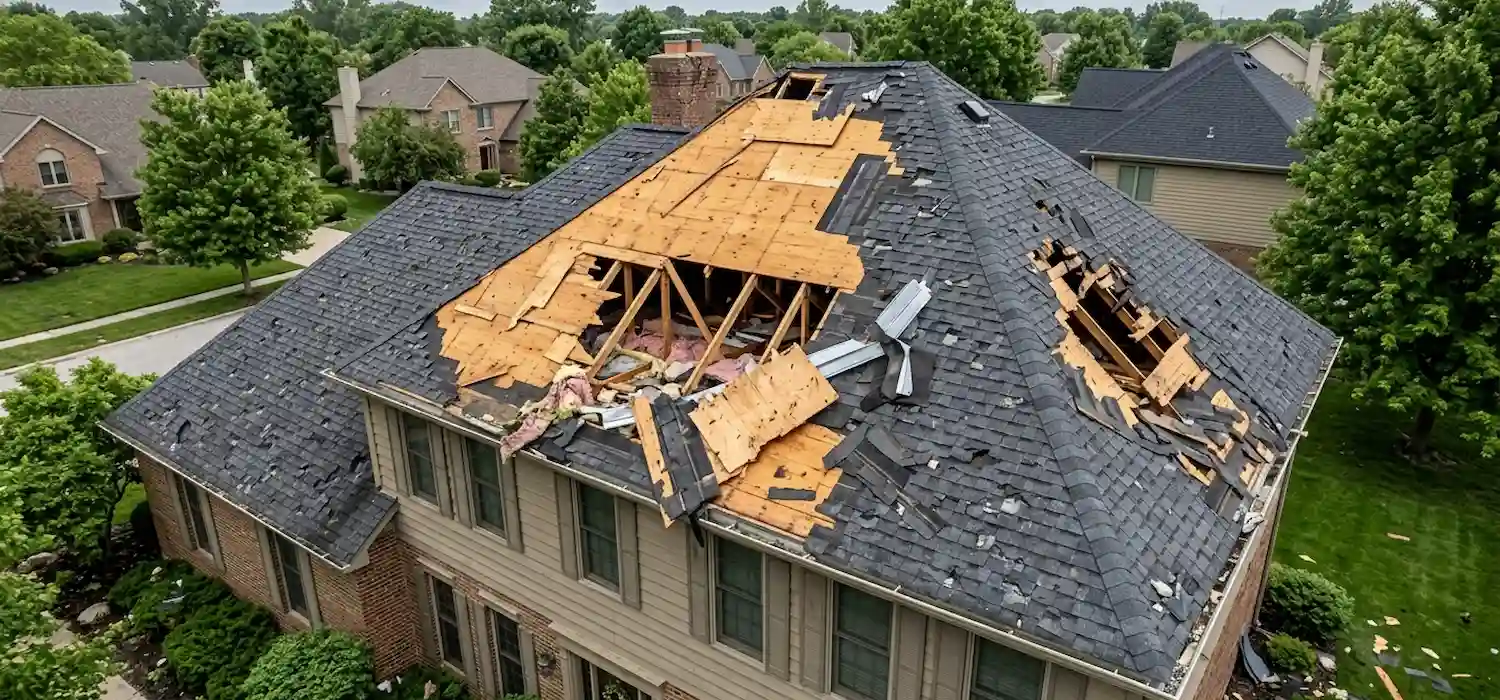
The storm has just passed. Shingles are scattered across the yard, and you see a water stain spreading on the ceiling. Your mind races to one urgent need: storm damage roof repair. The first steps you take can protect your home, your safety, and your insurance options, including how to get insurance to pay for roof replacement if the damage is severe.
This guide shows you what to do first after roof storm damage, how to document the problem, when emergency roof repair may be needed, and how to work with your insurer without making costly mistakes.
Quick Answer: What to Do First After Storm Damage
- Check for safety risks like downed power lines, standing water, or sagging ceilings.
- Stay off the roof. Inspect from the ground when it is safe.
- Take clear photos and videos of visible damage, inside and out.
- Make only safe, temporary repairs to stop more water entry.
- Keep all receipts for emergency materials and work.
- Contact a qualified roofing professional for an inspection.
- Review your insurance policy and report the loss as required.
These steps help you protect your home and build a strong record for any claim.
Stop Before You Climb
It may seem like the logical thing to do to immediately head out to the roof following a storm. However, a compromised roof can be hazardous. Shingles wet from rainwater may prove to be slippery, while unseen weak areas may collapse. There might even be objects falling around from above.
Instead, it may be more effective to have a professional check the situation out. They can identify any problem you may have failed to notice on the ground level.
First Steps After Roof Storm Damage
Start with safety and simple actions that reduce risk.
- Secure the area. Keep people and pets away from leaks, sagging ceilings, or debris zones.
- Check for hazards. Look for downed lines, standing water, or exposed wiring. Call emergency services if needed.
- Inspect from the ground. Walk around the home and note missing shingles, dents, or debris on the roof and in gutters.
- Document early. Take wide photos of each side of the house, then close-ups of damage. Include interior stains or leaks.
- Limit water entry. If it is safe, place buckets under drips and move valuables away from the leak path.
These actions create a clear record and reduce further damage while you plan the next steps.
The Damage You Cannot See
All the effects of the storm are not visible. The wind can lift the shingles without detaching them. Hail may bruise the materials without any visible signs on the material. Flashing seals may break apart. Some holes may allow water to move further away from the holes.
In the end, there might be some ceiling stains, wet insulation, and even mold due to the hidden roof damage. This is why the inspection by a specialist is necessary. The roofer will inspect the roof surface, flashing, vents, and the attic area. He will be able to correlate the storm roof damage with the signs in the house.
Repairs, Insurance, and What Happens Next
After you document the damage, focus on stopping more water entry and understanding your options.
- Emergency roof repair. If water is actively entering, you may need quick tarping or temporary patches. Only do this if it is safe.
- Temporary protection. Use tarps, buckets, and plastic sheeting to protect interiors. Keep all receipts for these materials.
- Document before permanent fixes. Take photos and notes before major repairs when it is safe. This helps support your records.
- Insurance requirements. Review your policy for reporting timelines, mitigation duties, and claim steps. Follow the required process.
- Repair estimates. Get written estimates from qualified roofing contractors. Ask for a detailed scope that matches the damage.
- An adjuster or independent inspector may review the roof. Share your photos, notes, and contractor report.
- Repair or replacement. Depending on the roof’s condition and policy terms, storm damage may lead to repair or replacement. Coverage varies by policy and cause of loss# Storm Damage Roof Repair: What Homeowners Need to Do First
The storm just passed. You step outside and see shingles on the lawn, a dent in the gutter, and a water stain spreading across the ceiling. Your first thought is likely about storm damage roof repair and what to do right now.
The first few steps matter. They can keep your family safe, limit further damage, and help you document the loss for insurance. This guide explains what to do first after roof storm damage, how to handle emergency repairs safely, and what to expect next.
Quick Answer: What to Do First After Storm Damage
- Check for safety risks like downed power lines, standing water, or sagging ceilings.
- Stay off the roof. Inspect from the ground or a safe window.
- Take clear photos and videos of visible damage, inside and out, with timestamps.
- Make only safe, temporary repairs to stop water entry, such as tarps or buckets.
- Keep receipts for any emergency materials or services.
- Contact a qualified roofing professional for an inspection.
- Review your insurance policy and report the loss as required.
These steps help protect your home and support a smoother claims process.
Stop Before You Climb
It is very tempting to just climb up there and inspect the damage firsthand, but a damaged roof after a storm can also be hazardous.
The wet shingles are slippery, there may be some undetectable damage to the deck that could compromise the integrity of the roof. Other hazards include falling branches, open flashing, loose nails and even possibly downed power lines. Sometimes it is just better to have someone else inspect the roof.
First Steps After Roof Storm Damage
Start with a simple, safe plan. Focus on protection, documentation, and getting the right help.
Check for immediate safety risks. Look for downed power lines, standing water, or ceilings that sag or bulge. If you see these, stay clear and call emergency services or an electrician as needed.
Document visible damage from a safe spot. Use your phone to take wide shots of the whole house and roof from each side. Then take close-ups of missing or lifted shingles, dents, cracks, and debris. Do the same inside: photograph water stains, drips, and wet areas. Turn on location and timestamp settings if your phone allows.
Prevent further damage when it is safe. Place buckets under active drips. Move furniture and electronics away from the leak path. If you can do it safely, cover damaged areas with a tarp that extends past the problem spot. Do not make permanent repairs before documenting the loss.
Contact a qualified roofing professional. Ask for a storm damage inspection and a written report. A pro can spot issues you may miss from the ground and explain whether you need storm damage repair or a larger fix.
Review your insurance requirements. Check your policy for reporting deadlines, required documentation, and rules about temporary repairs. Keep every receipt for tarps, materials, or emergency services.
The Damage You Cannot See
Not all roof damage caused by storms will be noticeable. For instance, the wind can lift the shingles but without ripping them off. The hail can bruise the shingles or damage their seals. The vent flashing and the chimney flashing might become bent or separated. Small holes can allow water to get in gradually resulting in water staining or leaking even days after the incident.
This is where the importance of an inspection lies. A person skilled at inspections can spot these damages and relate them to the occurrence of the storm.
Repairs, Insurance, and What Happens Next
After the initial steps, the focus shifts to repairs and the insurance process. Here is what to expect.
Emergency roof repair may be needed. If water is entering the home, temporary fixes like tarps or board-ups can limit damage. These are meant to protect the home until a full repair plan is in place.
Document before permanent repairs when safe. Take photos and notes before major work begins. This helps show the original damage to your insurer and contractor.
Gather information for your claim. Keep a simple file with photos, videos, weather records for the storm date, contractor reports, and receipts for emergency work. This supports your claim and helps the adjuster understand the loss.
Understand that coverage varies. Insurance may cover damage from covered perils like wind or hail, but it depends on your policy terms, roof age, condition, and exclusions. Do not assume full coverage without written confirmation.
Expect an inspection and estimate. An adjuster may inspect the roof or review photos and reports. Your contractor will provide a repair or replacement estimate. The final decision may lead to repair or replacement depending on the roof’s condition and policy coverage.
Repair or Replace?
Questions are usually raised by homeowners regarding if repairs should suffice or if a new roof is needed. This will depend on various aspects.
- Extent of damage and kind of damage: Minor damage can be repaired but extensive damage could signal replacement.
- Age of the roof and its general condition: It would be better to replace an old roof with many problems.
- Water entry: Leaks or water damage can influence your decision.
- Building code of the locality: There may be codes that stipulate replacement or matching of material in cases of some extent of damage.
- Feasibility of repairs: If similar shingles cannot be found or there are too many weak spots, then replacement may be preferable.
- Terms of your insurance coverage.
A qualified roofer and your adjuster can help you weigh these factors.
Common Storm Damage Scenarios
Situation | What It May Mean | Recommended Next Step |
Missing or lifted shingles | Possible wind damage | Arrange a roof inspection |
Small roof leak | Water may be entering | Protect the interior and seek professional help |
Severe visible damage | Roof system may be unsafe | Avoid the roof and contact a qualified professional |
Hail marks or dents | Possible hail damage | Document the damage and request an inspection |
Temporary covering needed | Risk of further water damage | Use safe temporary protection and follow policy requirements |
Note: These examples are general guidance. The correct action depends on the roof’s condition, safety risks, local requirements, and insurance policy.
Key Takeaways
- Safety comes first. Do not climb onto a storm-damaged roof.
- Document damage early with clear photos and videos, inside and out.
- Use temporary, safe measures to limit water entry until repairs begin.
- Contact a qualified roofing professional for a thorough inspection.
- Review your insurance policy and keep all receipts and reports.
Conclusion
If a storm has occurred, take action quickly but safely. Look out for potential risks, assess the damage that is obvious, and carry out any repairs that will be safe in the short term. It is time now to call in a roof specialist to conduct an inspection and develop a plan of action for the repair of storm damage. Immediate action may help your situation greatly.
Frequently Asked Questions
What should I do first after storm damage to my roof?
Check for safety risks, stay off the roof, document damage with photos and videos, make safe temporary repairs to stop water entry, and contact a qualified roofing professional for an inspection.
Is emergency roof repair covered by insurance?
Coverage depends on your policy and the cause of damage. Many policies cover temporary measures to prevent further loss, but you should review your terms and speak with your insurer.
How do I document roof storm damage for a claim?
Take wide and close-up photos from all sides, include interior damage, enable timestamps, save weather records for the storm date, and keep receipts for any emergency repairs or materials.
When is storm damage repair enough, and when is replacement needed?
It depends on the size and type of damage, roof age and condition, water intrusion, local rules, and insurance policy terms. A professional inspection helps determine the best path.
Should I make permanent repairs before the insurance adjuster sees the roof?
In most cases, no. Make only safe, temporary repairs to prevent further damage, document everything, and wait for the adjuster or your insurer’s guidance before permanent work.