The storm passes and the yard is covered in ice. From the street, the roof looks fine. A few days later, you notice loose granules by the downspout and a small water stain on the ceiling. That is how a hail damage roof problem can startquietly, and easy to miss from the ground.
This guide shows you what hail damage services look like, what signs to watch for after a storm, and the next steps to take. You will also learn how hail damage repair works, when replacement may be considered, and how to document damage for an insurance claim.
Quick Answer
Hail can damage shingles and other roofing materials even when the damage is not easy to see from the ground. Document visible damage from a safe place and have the roof checked by a qualified professional when needed. Do not climb onto the roof yourself.
What Is Hail Damage to a Roof?
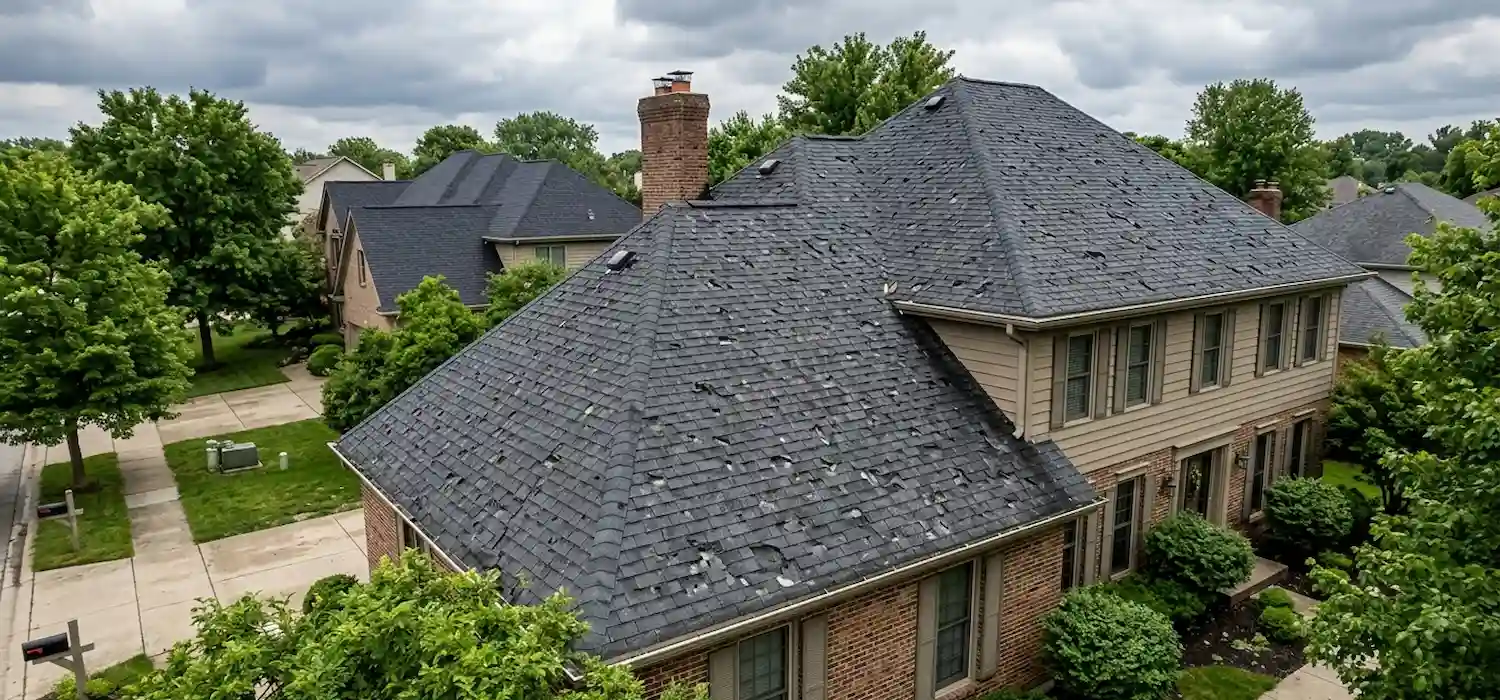
Damage that is caused by hail on the roof occurs through hailstones hitting the roof structure. This can result in cracks forming on shingles, granules being knocked away from shingles, or dents on metal roof components. Damage may be varied depending on the hailstone size and conditions in the hailstorm.
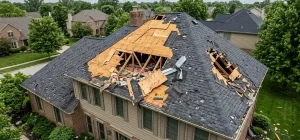
The damage caused by hail can either be obvious like in case of missing shingles, or hard to detect like bruises found under the granule layer.
What Does Hail Damage Look Like on a Roof?
If you are wondering what does hail damage look like on a roof, start with the most common signs. Not every mark means hail, but these clues often point to storm-related issues.
Cracked or Damaged Shingles
Look for random cracks or splits in shingles. Hail can break the mat under the granules, which may lead to cracks over time.
Missing or Loose Shingles
Strong hail and wind can lift or tear shingles. Missing shingles leave gaps that can lead to leaks.
Lost Shingle Granules
Granules are the tiny, sand-like bits on asphalt shingles. After a storm, you may find them in gutters, downspouts, or near the foundation. Heavy granule loss can signal impact damage above.
Dents or Impact Marks
Hail can leave dents on metal vents, flashing, or gutters. On some roofing materials, you may see small circular marks where hail struck.
Damaged Roof Vents and Flashing
Check roof vents, pipe boots, and chimney flashing. Dents or tears in these areas can allow water to enter.
A professional inspection may be needed to confirm the cause of damage.
Signs of Roof Hail Damage
Watch for these signs of roof hail damage after a storm:
- Damaged, cracked, or missing shingles
- Granules around downspouts or in gutters
- Impact marks or bruises on shingles
- Dents on vents, flashing, or gutters
- Loose roofing materials
- Water stains on ceilings or walls
- Damage to siding, windows, or exterior surfaces
Some signs appear on the ground or around the property rather than directly on the roof.
Can Hail Damage a Roof Without Looking Obvious?
Yes. It may not be always possible to identify the damages done to the roof by visual inspection. The presence of lighting, the height of the roof, the color of the roof, and the area where the damage was done can help conceal small impact damages.
It may not be always safe to conclude that the roof is all right just by looking at it.
What to Do After a Hailstorm
Follow these steps to stay safe and protect your home.
Step 1: Check the Property From a Safe Place
Look from the ground. Use binoculars or your phone’s camera zoom. Do not climb onto the roof.
Step 2: Look for Visible Signs
Check the yard, gutters, siding, windows, and other areas for storm-related damage.
Step 3: Take Photos
Capture clear photos of visible damage. Take wide shots for context and close-ups for detail.
Step 4: Check for Interior Signs
Look for water stains, damp spots, or drips in the attic and ceilings.
Step 5: Contact a Qualified Roofing Professional
A professional inspection can identify damage that is difficult to see. Ask for a written report.
Step 6: Review Your Insurance Policy
Understand your coverage before making assumptions about payment. Note your deductible and claim deadlines.
Hail Damage Repair
Hail damage repair depends on the type and extent of damage. Repairs may include:
- Replacing damaged shingles
- Repairing flashing
- Repairing damaged vents
- Addressing leaks
- Replacing other damaged roof components
A roofing contractor will recommend the right repair based on the inspection. Do not attempt roof repairs yourself.
Hail Damage Roof Repair vs. Roof Replacement
Not all hail-damaged roofs require complete replacement. Hail-damaged roof repair might be an option if the damage is only present in certain areas.
Replacement could be one of your options if the damage is severe or the roof cannot be properly repaired. This should be determined by an experienced roofing contractor.
Factor | Repair | Replacement |
Damage Scope | Limited to specific areas | Widespread across multiple slopes |
Shingle Condition | Isolated cracks or bruises | Extensive cracking, granule loss, or mat exposure |
Age of Roof | Within useful life | Near or past expected lifespan |
Cost | Lower upfront cost | Higher upfront cost, but may improve longevity |
Insurance Review | May be covered depending on policy | May be covered if damage meets policy terms |
Timeline | Faster completion | Longer project with more coordination |
How to Document Roof Hail Damage
Organized documentation can help support a claim. Include:
- Photos and videos of damage
- Date of the storm
- Visible damage on the roof and around the property
- Roof inspection findings
- Repair estimates
- Contractor information
- Insurance claim information
Keep copies of everything. Documentation does not guarantee approval, but it makes the review clearer.
How to Get Insurance to Pay for Roof Replacement
Many homeowners ask how to get insurance to pay for roof replacement. Start by reviewing your homeowners insurance policy. Understand the covered causes of loss, such as wind and hail damage.
Document the damage and report the claim according to your policy. Get a professional roof inspection and keep repair estimates and supporting records. Cooperate with the insurance inspection and understand your deductible.
Ask questions if the insurer’s decision is unclear. Coverage depends on the policy, the cause of damage, exclusions, roof condition, deductible, and claim evaluation. Do not exaggerate damage.
Common Hail Damage Claim Mistakes
Avoid these common mistakes:
- Ignoring small signs of damage
- Climbing onto the roof without proper safety equipment
- Waiting too long to report damage
- Failing to take photos
- Throwing away damaged materials too soon
- Assuming every roof replacement is covered
- Choosing a contractor based only on price
- Signing documents without understanding them
- Making unsupported statements about the cause of damage
When Should You Call a Roofing Professional?
Call a roofing professional when:
- You see damaged shingles
- You find granules around the property
- You notice water stains
- You see damage to vents or flashing
- A strong hailstorm recently passed through
- You cannot safely inspect the roof yourself
- You are unsure whether visible damage came from hail
Do not inspect unsafe areas yourself.
Hail Damage Checklist
Here is the checklist for homeowners to keep in mind when hail damage occurs:
- Check the property from the ground after the storm
- Look for granules in gutters and downspouts
- Photograph visible damage
- Check ceilings and attic for water stains
- Contact a qualified roofing professional for an inspection
- Review your insurance policy and note deadlines
- Keep all records and estimates in one place
Found Possible Hail Damage? Do This Next
Do these next steps:
- Stay off the roof and work from safe areas
- Take clear photos and videos
- Call a roofing professional for an inspection
- Review your policy and contact your insurer if needed
- Keep all documentation organized
Good to Know: Some hail damage may not be easy to see from the ground. A professional roof inspection can help identify damage that needs closer review.
Simple Scenario
When she wakes up in the morning after a storm at night, Maria sees ice on the property along with some shingles near the driveway. She photographs the scene on the ground, examines the attic for any signs of staining, and talks to a roofing company. The results reveal that there is missing granules and bruises on the south side.
Before You File a Roof Damage Claim
- Take photos and videos of damage
- Get a professional roof inspection
- Collect a repair estimate
- Review your policy coverage and deductible
- Note the storm date and claim details
Conclusion
While roof hail damage is not always visible, some indicators usually emerge following a storm. Check out damaged shingles, granule loss, and impact points. Be careful, document your findings, and get a professional opinion on the roof.
Make sure that you have read your insurance policy before jumping into any conclusions. In case you want to file a claim, keep all the records well-organized and follow the inspection process.
Frequently Asked Questions
Does Homeowners Insurance Cover Roof Leaks From Storms?
Sudden covered storm damage may qualify depending on the policy. Check your specific terms and exclusions.
Does Insurance Cover a Roof Leak From Old Shingles?
Wear and aging are often treated differently from sudden damage. Coverage may be limited or excluded.
Does Homeowners Insurance Cover Interior Water Damage?
Interior damage may receive different treatment from the damaged roof itself. Review your policy details.
Should I File a Claim for a Small Roof Leak?
Compare the damage, deductible, policy terms, and repair cost. Small claims may not always make sense.
Can Insurance Pay for a Full Roof Replacement After a Leak?
Full replacement depends on the cause, damage level, policy terms, and insurer review. One leak does not guarantee replacement.