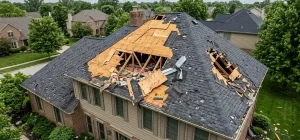
A storm leaves shingles in the yard. Water begins dripping through the ceiling. A homeowner wonders how to get insurance to pay for roof replacement. Roof damage does not automatically mean the insurer will approve a full replacement.
Homeowners need to act quickly, protect the property, document the damage, review the policy, and follow the claim process carefully. In this guide, you will learn each step of the roof insurance claim process, from documenting damage to reviewing the final payment.
Table of Contents
- Quick Answer: How Can Insurance Pay for a Roof Replacement?
- Does Home Insurance Cover Roof Replacement?
- Roof Damage That May Be Covered
- Roof Problems Often Not Covered
- Does Homeowners Insurance Cover Roof Leaks?
- Hail Damage Roof Claims
- Storm Damage Roof Repair and Emergency Protection
- Step-by-Step Roof Insurance Claim Process
- Understanding ACV, RCV, Deductibles, and Depreciation
- What If the Insurance Estimate Is Too Low?
- What If the Roof Claim Is Denied?
- When Professional Help May Be Useful
- Common Roof Insurance Claim Mistakes
- Simple Roof Claim Timeline
- Key Takeaways
- Conclusion
- Frequently Asked Questions
Quick Answer: How Can Insurance Pay for a Roof Replacement?
First, determine if your insurance policy covers the damage. Protect your home from further damage and take pictures or video of the scene. Go through your policy and file the claim as soon as possible.
Cooperate with the insurance adjuster and verify the estimate. Supply the missing documentation and get the required repairs done.
Filing your claim according to these steps doesn’t ensure payment. It depends upon the policy details, cause of the damage, condition of the roof, and state laws.
Does Home Insurance Cover Roof Replacement?
When you ask does home insurance cover roof replacement, the answer depends on several factors. Coverage usually depends on the cause of damage, policy terms, roof condition, exclusions, deductibles, and state rules.
Roof Damage That May Be Covered
Possible covered causes may include wind damage, hail damage, falling trees, fire, lightning, sudden accidental damage, and water damage caused by a covered roof opening. These are often called covered perils.
Roof Problems Often Not Covered
Common exclusions may include normal wear, poor maintenance, long-term leaks, rot, mold, improper installation, old age, insect damage, pre-existing damage, and excluded cosmetic damage. Policies differ, so always check your own wording.
Does Homeowners Insurance Cover Roof Leaks?
Many homeowners ask does homeowners insurance cover roof leaks. The answer depends on what caused the leak. Insurers often separate the sudden event that caused the opening from damage to the roof itself, interior water damage, long-term seepage, and maintenance-related leaks.
An insurer may cover resulting interior damage but not the worn roof component that caused the leak. Coverage is not universal and depends on policy terms.
Hail Damage Roof Claims
There are some obvious symptoms to look out for when filing a hail-damaged roof claim. There could be holes in the metal vents, cracks in the shingles, missing granules, damage to the gutters, broken skylights, and soft spots in the roof.
Storm Damage Roof Repair and Emergency Protection
After a storm, homeowners usually have a duty to take reasonable steps to prevent more damage. This is part of storm damage roof repair and emergency roof repair planning.
Collect buckets under all active leaks and relocate valuables in the damp areas. Tarp the damaged portion of your roof only when it is safe. There is also an option of hiring a professional to cover the damage with a tarp.
Remember to take photos of any temporary work and to retain all receipts. Any permanent repair should be done after you have recorded your damage and discussed it with your insurance company.
Step-by-Step Roof Insurance Claim Process
Step 1: Protect People and Prevent More Damage
Safety comes first. Contact emergency services when there is fire, collapse risk, electrical danger, or serious flooding. Take reasonable steps to prevent more damage.
Common mistake: Waiting too long to place a temporary cover.
Record to keep: Photos and receipts for emergency work.
Step 2: Identify the Date and Cause of Loss
The reported event matters. Possible causes include wind, hail, fallen tree, fire, and sudden water entry. Do not guess the cause.
Common mistake: Reporting the wrong date of loss.
Record to keep: Weather reports and storm dates.
Step 3: Document the Roof and Interior Damage
Take wide photos, close-up photos, and videos. Capture ceiling stains, wet insulation, damaged belongings, fallen shingles, and damaged vents or gutters. Keep weather records and repair receipts.
Common mistake: Deleting original photo files.
Record to keep: Dated photos and videos with location data.
Step 4: Review the Insurance Policy
Check covered causes, exclusions, deductible, ACV or RCV settlement, roof-age rules, cosmetic damage exclusions, matching provisions, code-upgrade coverage, and claim deadlines. Ask for help when policy language is unclear.
Common mistake: Skipping the policy review.
Record to keep: Your policy declarations page.
Step 5: Report the Homeowners Insurance Roof Claim
When you file a homeowners insurance roof claim, provide your policy number, date of loss, basic damage description, emergency repair details, and current contact information. Ask for the claim number and adjuster contact details.
Common mistake: Missing claim-reporting deadlines.
Record to keep: Claim number and adjuster contact.
Step 6: Get a Qualified Roof Inspection and Estimate
The contractor should provide a clear scope of work. The inspection may include roofing materials, roof slopes, square measurements, damaged components, flashing, gutters, vents, decking concerns, code-related items, and interior damage.
Common mistake: Using an unlicensed contractor.
Record to keep: Written inspection report and estimate.
Step 7: Attend the Insurance Adjuster Inspection
The homeowner or contractor may help by showing documented areas. Remain factual and organized. Do not argue during the inspection.
Common mistake: Hiding pre-existing damage.
Record to keep: Notes from the adjuster visit.
Step 8: Review the Claim Estimate and Payment
Understand deductible, actual cash value, replacement cost value, depreciation, recoverable depreciation, nonrecoverable depreciation, and scope differences. Use a simple numerical example only if clearly labeled as hypothetical.
Common mistake: Accepting the first estimate without review.
Record to keep: Claim estimate and payment breakdown.
Step 9: Complete Repairs and Submit Final Documents
Some policies release recoverable depreciation after completed work and proof of payment. Possible records include contractor invoice, completion certificate, photos, receipts, permit records, final scope, and proof of payment.
Common mistake: Missing final paperwork deadlines.
Record to keep: Final invoice and proof of payment.
Understanding ACV, RCV, Deductibles, and Depreciation
Term | Simple Meaning | Why It Matters |
Actual cash value | Replacement cost minus depreciation | Determines initial payment |
Replacement cost value | Cost to replace with similar materials | Determines final payment after repairs |
Deductible | Amount you pay before insurance pays | Reduces your settlement amount |
Depreciation | Loss of value due to age and wear | Reduces ACV payment |
Recoverable depreciation | Depreciation you may get back after repairs | Increases final payment if allowed |
Nonrecoverable depreciation | Depreciation you cannot recover | Reduces total settlement |
Supplement | Request for added claim payment | May cover missing damage or code items |
What If the Insurance Estimate Is Too Low?
Contractor and insurance estimates may differ because of missing line items, different roof measurements, hidden damage, material differences, code requirements, disposal costs, labor costs, interior damage, and detach-and-reset work.
A supplement is a request for added claim payment based on documented work or damage missing from the original estimate. A supplement is not guaranteed to be approved.
What If the Roof Claim Is Denied?
The first step involves requesting the insurer to write down the reason for denial of the claim. You should then go through the cause and see whether it is consistent with the policy you have. If any evidence that is needed to prove the claim is missing, you should collect photographs, estimates, bills, or any other documents. Then you can request the insurer to reconsider the claim.
Some reasons that could lead to the rejection of the claim are old damage, poor maintenance, delayed claims, lack of evidence, excluded damage, or repair expenses that do not exceed the deductible. Cancellation or expiration of the policy could also be another reason for the rejection of the claim.
When Professional Help May Be Useful
The roofing contractor conducts the inspection of the damage, develops the repair scope, and does the actual roofing. The insurance adjuster investigates the claim on behalf of the insurance company. The public adjuster is a professional that may represent the insured in case of the claim, provided he/she has appropriate license and permission.
Licensing, fee, and permission vary from state to state. Do not always recommend one professional to your customers.
Common Roof Insurance Claim Mistakes
Avoid these common mistakes:
- Waiting too long to report the damage
- Throwing away damaged roofing materials
- Forgetting to take photos and videos
- Making permanent repairs before the inspection
- Losing receipts for temporary repairs
- Signing a contract without reading it
- Hiring an unlicensed contractor
- Accepting an estimate without checking it
- Missing important policy deadlines
- Assuming every roof leak is covered
- Adding false or exaggerated damage
- Failing to protect the home from more damage
These mistakes can delay the claim or make it harder to prove the loss. Keep clear records, follow the policy steps, and ask questions when something is unclear.
Simple Roof Claim Timeline
First 24 Hours
Protect people, stop more damage, take photos, and save receipts.
First Few Days
Review the policy, report the claim, and schedule a roof inspection.
During the Inspection Stage
Meet the adjuster, share evidence, and keep written records.
After the Claim Decision
Review the estimate, ask questions, submit missing documents, and complete approved work.
Claim timelines vary by insurer, damage level, weather, contractor availability, and state rules.
Key Takeaways
- Coverage depends on the cause of damage and policy terms.
- Document damage with photos, videos, and receipts.
- Report the claim promptly to avoid deadlines.
- Review the insurer’s estimate and scope carefully.
- No payment or approval is guaranteed by any guide.
Conclusion
An insurance roof replacement depends on the cause of damage, policy terms, evidence, and claim process. Protecting the home, documenting damage, reviewing the policy, reporting the claim, getting a qualified inspection, checking the insurer’s estimate, keeping records, and meeting deadlines all matter.
Review your policy and create a damage record before contacting the insurer. This approach supports a clearer roof insurance claim process and helps you understand your settlement.
Frequently Asked Questions
How Do I Get Insurance to Pay for a Roof Replacement?
Confirm the damage came from a covered event, document the loss, review your policy, report the claim, and cooperate with the adjuster. Payment is not guaranteed and depends on policy terms.
Does Homeowners Insurance Cover an Old Roof?
It may cover sudden damage from a covered peril, but old age, wear, and maintenance issues are often excluded. Check your policy for roof-age rules.
Does Homeowners Insurance Cover Roof Leaks?
It may cover interior damage from a sudden covered event, but long-term leaks or wear-related leaks are often excluded. Policy terms control the decision.
Should I Call a Roofer or Insurance Company First?
Call your insurer to report the claim, then schedule a qualified roof inspection. Keep records of all communications and inspections.
What Happens If My Roof Claim Is Denied?
Request the denial in writing, review the reason, gather missing evidence, and ask for reconsideration. Contact your state insurance department or a licensed professional if needed.